
Analysis
Bosch's technical material illustrates the combination of embedded software, electronic hardware, diagnostics and security functions in engine management. The company also describes modular AUTOSAR-compliant software. These are characteristics of Bosch solutions and may differ across vehicles.
How does an electronic engine control unit manage a combustion engine? Bosch Mobility's technical information explains the interaction of sensor inputs, embedded software and actuators. Here is an accessible overview of the main concepts.
What an electronic engine control unit manages
A combustion engine has to balance driver demand, efficiency and operating limits. The electronic engine control unit (ECU) coordinates a range of essential functions. Bosch identifies fuel supply, air management, injection and ignition among those tasks. These functions must work together under changing operating conditions rather than being handled in isolation.
How signals become control actions
Vehicle sensors provide information about operating conditions, such as engine speed, temperatures and airflow. Embedded software processes these inputs and determines suitable control actions. Actuators then carry out those commands. Injection and ignition timing illustrate the close relationship between sensor data, calculations and physical engine behavior. Exact implementations vary across engine designs and vehicle models.
The role of engine torque
Bosch presents torque as an important coordinating quantity for engine management. Driver demand is one input, but the management system also has to consider other operational requirements and protective limits. By combining those inputs, the ECU calculates how engine functions should respond. This is one reason why electronic engine management is substantially more complex than a simple on/off controller.
Embedded software and diagnostics
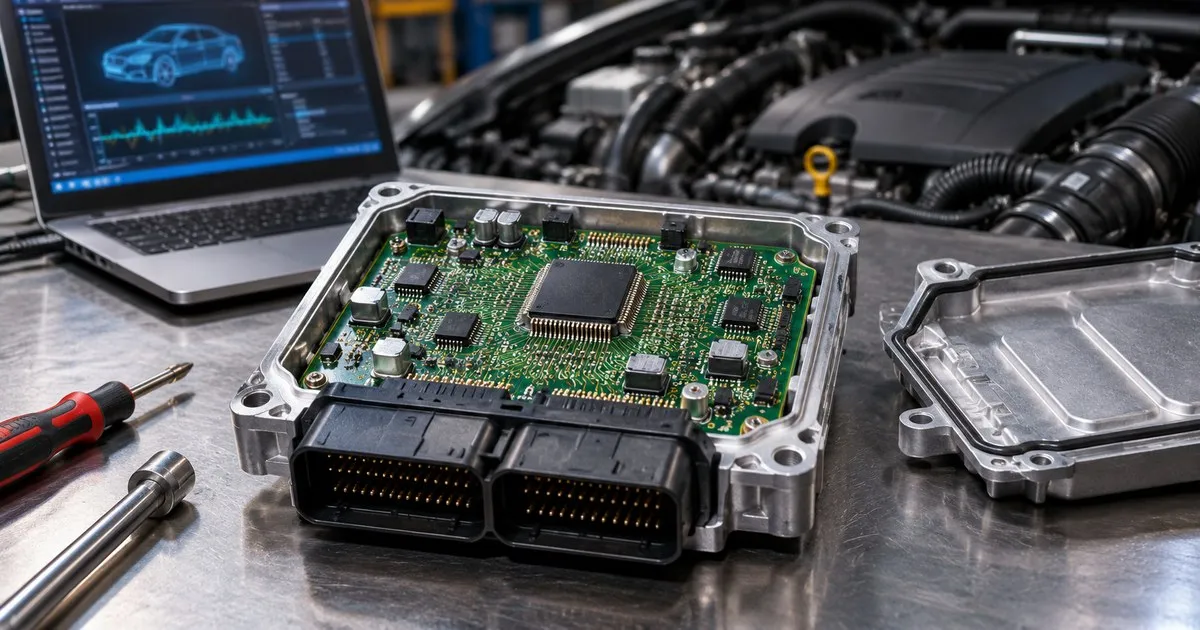
An ECU combines processing hardware, memory, interfaces and electrical input/output circuits. Its software runs specialized control functions, while monitoring and diagnostics help detect abnormal conditions. Bosch describes modular software compatible with AUTOSAR and integrated security and diagnostic capabilities in its solutions. The precise feature set depends on the individual ECU and application.
Why it matters for repair and development
A diagnostic trouble code does not necessarily prove that the ECU itself is defective. Problems can also originate in sensors, wiring, power delivery or mechanical components. Understanding this distinction matters for effective troubleshooting. For software engineers, an ECU is a practical example of real-time embedded computing where algorithms and physical machinery must respond together.
Reading the original source
The Bosch material describes the company's electronic engine management technology, not every possible vehicle architecture. It is useful technical background rather than a newly announced product. The original manufacturer page and its dated information sheet provide additional detail on the system described.
Original source: Bosch Mobility – Electronic engine control unit. Technical information sheet (PDF, August 2025).