
Analysis
Medical care for astronauts starts well before launch and continues long after landing. The rehabilitation process offers practical insight into the physiological challenges of sustained weightlessness and preparations for longer crewed missions.
Returning to gravity after a long mission
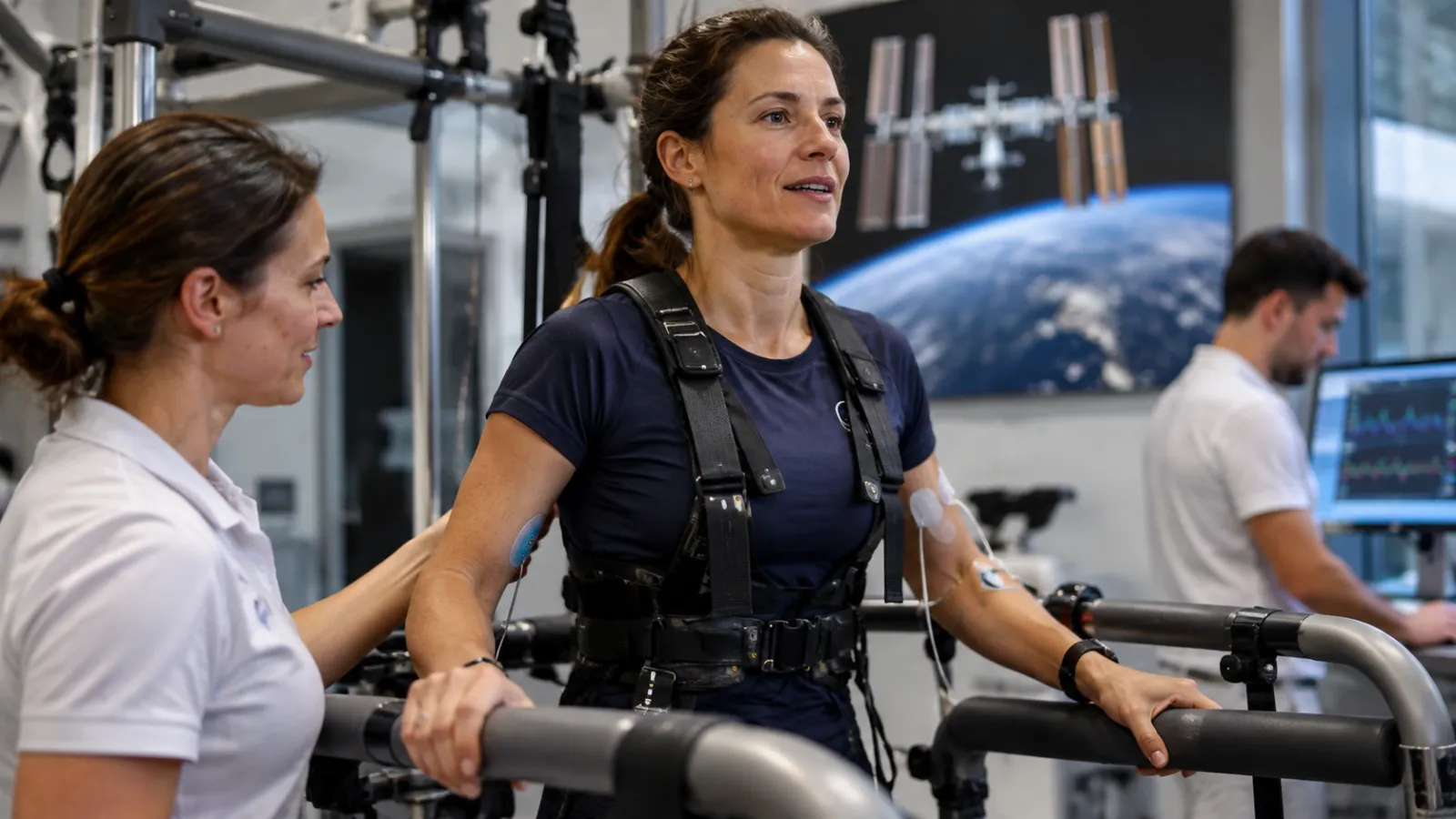
Sophie Adenot returned to Earth on 8 October 2026 following nearly eight months aboard the International Space Station. In an article published on 20 November, the German Aerospace Center (DLR) describes the two-week rehabilitation programme she completed at its :envihab research facility in Cologne. Flight surgeon Bimba Hoyer had helped oversee the astronaut's medical care before launch and throughout the mission.
Why walking and balance take time
Weightlessness changes how the body uses muscles and how the cardiovascular and balance systems respond. On arrival in Cologne, Adenot initially needed support from two people, DLR reports. The first assessments focused on circulation, muscle condition and coordination. Exercises then began with light weights and balance tasks, accompanied by an anti-gravity treadmill that supports part of the body's weight. This reduces strain on the spine while allowing controlled cardiovascular activity.
Rebuilding strength without overloading
Running, strength work and exercises in water were added during subsequent days. Coordination often improves within a few days after landing, but endurance and muscle strength recover more gradually. Medical supervision also includes planned rest and limits on excessive physical or mental demands. Rehabilitation is therefore not simply an intensive workout; progress must be matched to individual recovery.
Healthcare before, during and after flight
According to DLR, a more intensive medical programme begins around 21 months before an ISS launch, including checks of bone density, the spine and cardiovascular health. Astronauts retain access to medical consultations in orbit. Even after the first two rehabilitation weeks, data collection continues, with a final medical examination planned six months after the mission.
Source
Places: North Rhine-Westphalia