
Analysis
The discovery challenges explanations for early black-hole growth. Its enormous mass at such an early cosmic epoch is particularly difficult to account for.
The Euclid space telescope identified J1504+6252, nicknamed Dún Aonghasa, in roughly 18 months of survey data. ESA announced the result on November 24. Observations from ground-based facilities and the Hubble and James Webb space telescopes helped confirm the discovery.
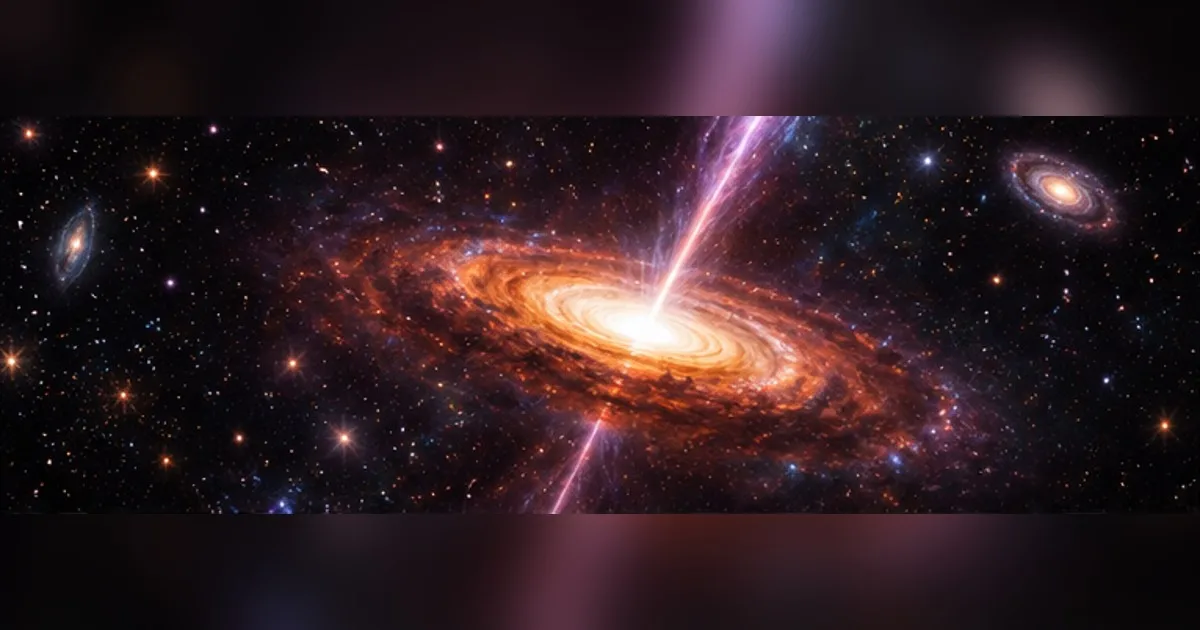
Quasars are luminous galactic nuclei where material near a supermassive black hole releases intense radiation. The new object has a redshift of 8.13, allowing astronomers to see it as it existed around 13.1 billion years ago. This pushes Euclid's earlier quasar record back another 40 million years.
Researchers report that the object is currently consuming matter relatively slowly, suggesting that much faster growth may have occurred earlier. Euclid's wide infrared survey makes it useful for locating such rare objects. The associated research appeared in Astronomy & Astrophysics on November 24.